“The English language is so elastic that you can find another word to say the same thing.” – Mahatma Gandhi
“You can have brilliant ideas, but if you can’t get them across, your ideas won’t get you anywhere.” – Lee Iacocca
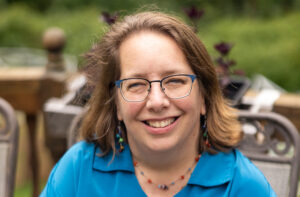
By Marianne Lyons Delorey, Ph.D.
When I was in high school, we did a writing exercise in which we all took off one shoe and put it in a pile. We were then asked to describe our shoe. After we were all done, the teacher shuffled the write-ups and began reading one at a time. Based on the description, we all took guesses about which shoe in the pile before us was being described. As you may imagine, many of the shoes fit into the fashion of the day and so many were very similar. It was an interesting experience to learn how to describe the details in such a way as to correctly identify one item among them.
I think about this exercise frequently when talking to my coworkers about specific residents. Conversations frequently follow this pattern:
“Oh, have you met Alice?”
“No, I don’t think so, what does she look like?”
“She has short gray hair and uses a walker.”
“Umm, that describes about 60 people in the dining room.”
“Oh yeah. She also has glasses.”
“Ok that narrows it down to 50.”
“She is a bit on the short side.”
“Forty.”
And so on.
I wonder if our inability to truly describe someone who is older is a failing of our language (not enough descriptive words) or if we have been conditioned not to use certain descriptors (wrinkles, weight, skin color, etc.) for fear of being insensitive.
But I have the answer.
Language helps us communicate. Communication is sometimes fact-based. In business or in science, it is important to be accurate, precise, and unfettered by emotion. If describing a person with gray hair is enough to pick a color out of your Crayola box, great. Use that color.
But language is also art. Art helps us find meaning in the world and breathe life into the subject matter by using words that take the description a step further. Consider these alternatives for the color gray that offer distinctions and shades of meaning (a nod to Benjamin Moore for several color suggestions)
Charcoal
Platinum
Cement dust
Pewter
Pearl
Silver
Classic gray
Steel
Smokey
Titanium
Dove gray
London fog
I worry that our language does not use enough words to describe older adults because our culture considers them unworthy of description. But for those of us who see each person as a work of art, how much more interesting can we make our everyday language? Consider these two examples:
The woman I saw in the grocery store looked about 75 years old. She appeared about 5 foot 3 and weighed about 200 pounds. She had gray hair and walked with a limp.
The woman I saw was on a mission, stomping through the produce section and hellbent on picking the best tomatoes. By the way she grabbed the fruit, it was clear she was strong and direct. She had a limp and was overweight, but I wouldn’t mess with her! Her steely hair and sharp eyes made me scoot out of her way when she came to the register.
And so I end with this thought. Do you have all the words you need to describe the older adults in your life? What value-laden words do you use? How can you encourage the use of language that maximizes the worth of people you love?
As with the writing exercise I described from high school, there is always a way to highlight details. Maybe we are all human, let’s try walking in each other’s shoes.
Marianne Lyons Delorey, Ph.D. is the executive director of Colony Retirement Homes. She can be reached at 508-755-0444 or [email protected] and www.colonyretirementhomes.com.
RELATED CONTENT:
Anxiety in America: Understanding Today’s Concerns