By Sharon Oliver
Contributing Writer
REGION – There are a handful of once-thriving communities now considered as ghost towns dotted throughout the Commonwealth. Contrary to popular belief, not all ghost towns are steeped in ghost stories and can leave, in some cases, no trace of previous civilization but only a silent echo.
Dogtown
Massachusetts’s most famous abandoned settlement is Dogtown on Cape Ann, set between Gloucester and Rockport. The name originated from the packs of stray dogs living wild there after the village, originally known as the Common Settlement, was deserted almost two hundred years ago. In Thomas Dresser’s booklet “Dogtown: A Village Lost in Time,” he described an inhabitant named Tammy Younger who was referred to as “queen of the witches.”
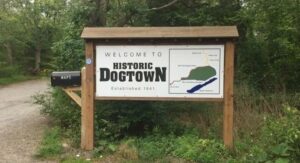
Younger entertained “buccaneers and lawless men,” made rum and butter, hosted card games, and read fortunes. She supported herself by selling butter and begging for fish at the harbor or by simply intimidating people into leaving her tithes of fish and corn. The original homes are crumbled ruins, but the cellars of these homes still remain and are marked by boulders inscribed with the former house numbers.
Anita Diamant also gives a historic fictional account of the former town which was populated by outcasts, scoundrels, spinsters and freed slaves in “The Last Days of Dogtown.” Beth Garland posted her opinion of the book on Facebook, “There is a book about the last days of Dogtown, based on a true story near Cape Ann and Gloucester Massachusetts. The book is by Anita Diamant….a good read.” At one point, approximately 80 affluent families lived in Dogtown which is now a top destination for hiking.
Catamount
Catamount is another forgotten village that was located in the hills of Colrain. Due to harsh terrain and poor soil making farming next to impossible, the village faded away in the early 1900s. All that remains are mossy stone foundations and a monument to the first public school in America to fly the U.S. flag in 1812.
The abandoned land was purchased by the Commonwealth of Massachusetts in 1967 and is largely part of the Catamount State Forest.
Dana
In Worcester County, the former town of Dana is partially hidden beneath the Quabbin Reservoir. After the reservoir was built to help supply water to Boston, Dana flooded and the residents evacuated in the 1930s.
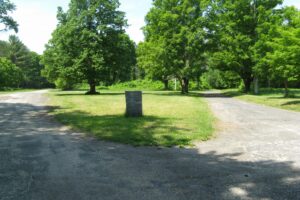
Photo/Wikimedia Commons/John Phelan
The town may be closed to vehicles, but hikers can still visit. Other towns lost to the reservoir are Enfield, Greenwich, and Prescott.
Norton Furnace
Established near Norton in 1825, Norton Furnace (also known as Norton Mills and Copperworks Village) is one of the lesser-known settlements. It is now part of the L.A. Foster Wildlife Refuge but is void of any marked trails. The town was established by Annes A. Lincoln Jr., who constructed a furnace for manufacturing there. By 1837, the furnace produced 375 tons of iron and employed 25 men. By 1850, the village had 25 houses, one store and a train depot in 1871.
The North Copperworks and Norton Furnace operated in the village until both companies relocated to Boston and Worcester. Reasons why Norton Furnace faded away are not exactly clear. The area is now called Meadowbrook.
Whitewash Village
Whitewash Village is a long-lost fishing town on Monomoy Island off Cape Cod. In 1864, a schoolmaster of Whitewash Village named Giddings Ballou, wrote an article about the village for Harper’s Monthly Magazine, describing it as a small fishing village that served as a place of refuge for “exhausted and frost-bitten mariners.”
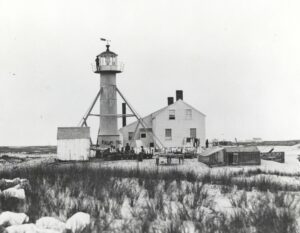
During the early 1800s, a changing coastline savaged by storms swallowed up the town’s school and Stewarts Tavern & Inn along with destroying its trade and once thriving fishing businesses. Today, the only way to reach the area is by boat. The only structure still existing is the Monomoy Lighthouse.
RELATED CONTENT:
Worcester State Hospital had a dark history despite good intentions
Keeping history alive – Richard Pickering of Plimoth Patuxet Museums
The dark history of Medway’s John “Grizzly” Adams