You have to go through the falling down in order to learn to walk. It helps to know that you can survive it. That’s an education in itself.
– Carol Burnett
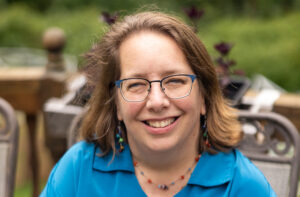
By Marianne Lyons Delorey, Ph.D.
I was speaking to a physician the other day and she noted that a lot of people in her practice had some generalized anxiety because of the state of politics today. She said people are anxious and worried.
It appears this anecdotal evidence is backed up by data. According to a new Gallup poll Americans are exceptionally anxious about their democracy, behind only Taiwan. Additionally, the younger generation in the U.S. is significantly more likely to be anxious about their country’s economic future.
I wonder if the older generation is less anxious about their economic future because they feel like they’ve seen worse and have a broader basis for comparing our current situation to harder times.
Given the prognosticating going on (and the anxiety of expecting the worst to happen) I am growing more curious about how people perceive the current day through the lens of how they thought the future would be.
I sat down with some elders recently and asked them what they thought about the events around World War II back while they were living it compared to how those events are remembered today.
Certainly, there is variability in how much and what is remembered. My oldest resident is 99. She was only two years old when the stock market crashed, but 15 by the time the U.S. entered World War II. Her memories were those of a teenage girl – she remembers her brother’s military service and the person coming to the house with a telegram that he had been hurt. She remembers him taking off his prosthetic to rest his leg. She remembers before the war that they couldn’t feed themselves well so her grandmother sold antique after precious antique to put food on the table.
Another resident had clearer memories of the events that led up to the war. She watched the reels in the cinemas and stayed on top of the news. She read a lot but did not worry her parents with her concerns. She learned about the atrocities of World War II in bits and pieces and in school afterwards.
Yet another resident simply remembers her brother’s life being lost and the telegram arriving by bicycle.
My godfather remembers throwing bread over the fence to the prisoners in the camp in Boston. (Yes, there was a prisoner of war camp for Italians in Boston. Read about it here).
While all these elders had memories of the historical events, their recollections seemed to be personal connections and personal impacts rather than a focus on the larger society. I wonder if it is too difficult to recall the larger political discussion later on or if the ruminations are spoiled by those who write the history books.
It also strikes me that, much like today, there were bigger problems for the everyday person to worry about than what was happening so many miles away. Hunger was real, hardship was real. Death came to the door.
And so, I wonder out loud, how will today be perceived in 50 years? What will our grandchildren’s children be learning in school about the events of today and how they shaped their lives? Tomorrow will hold the key. Perhaps the Gallup poll and this article will serve as a record. People are anxious. We don’t want our democracy to crumble, but maybe there is a better, brighter future ahead and we just can’t see it yet.
Perhaps Carol Burnett said it best. “You have to have faith that there is a reason you go through certain things.”
While I do not share her faith, I do have hope in us.
Marianne Lyons Delorey, Ph.D. is the executive director of Colony Retirement Homes. She can be reached at 508-755-0444 or [email protected] and www.colonyretirementhomes.com.
RELATED CONTENT:
The case against individualism
Fortifying our cities for the silver tsunami