By Sharon Oliver
Contributing Writer
BOSTON – Oftentimes, people say things without ever knowing why or how it all started. The slang term “wicked,” for example, as an intensifier, has been uttered from the tongues of Bostonians for at least nine decades. Origins of its regionalism range from Salem (witch trials) to a former Boston mayor and even the slang’s meaning seemed to once differ.
In 1927, an advertisement for Listerine claiming the product can treat a “wicked cold” was placed in The Boston Globe. In 1936, a Globe writer complained about a “wicked cold morning,” but two years earlier, a source jubilantly shared with another Boston Globe reporter that he had gotten a “wicked good price” for plots of land.
Multitude of uses
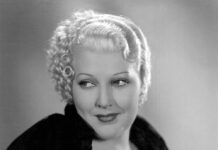
Over time, “wicked” became synonymous with the words “very” or “extreme.” One myth surrounding the word centers around former Boston Mayor James Michael Curley, who served four terms as mayor and spent time in prison for mail fraud during one of them. Curley ran for U.S. House of Representatives in 1942 but his affair with “The Wizard of Oz” Wicked Witch of the West actress Margaret Hamilton stalled his campaign. After he broke off the affair, Cardinal William Henry O’Connell of the Boston archdiocese proclaimed: “Our wicked man has become wicked good!” Despite Curley’s indiscretions, he was a popular political figure.

In F. Scott Fitzgerald’s 1920 debut novel “This Side of Paradise,” the prolific author writes, “You two order; Phoebe and I are going to shake a wicked calf.” From the 1960s onward, the word has shown up in various ways. In 1960, a reporter referred to a “wicked hot sauce.” In 1966 there was an ad calling the diet 7-Up drink “wicked cool” and the word steadily made its way into the business sector.
Everyone loves to watch the Super Bowl commercials and in 2020, Massachusetts natives Rachel Dratch, Chris Evans, John Krasinski and even Boston Red Sox David Ortiz introduced many to the slang in an ad for Hyundai. The spot opens with Dratch and Evans standing outside watching a man seeming to struggle with parking, only to see the driver of the new Sonata is Krasinski. What follows is their true thick accent.
“Look at these two troublemakahs,” the former “Office” star says.
“Wicked cah. Is that new?” Dratch says.
“Oh, you’re not fitting your cah in there,” Evans warns.
“Look who’s got Smaht Pahk,” Krasinski declares as he steps out of the car, while Dratch and Evans look on as the vehicle eases into the spot on its own.
“Hey, he can’t pahk there!” he shouts, doing his best Boston accent.
“He’s got Smaht Pahk,” Dratch says.
“Wicked smaht,” Ortiz says.
Before being traded to the Memphis Grizzlies, former Celtics player Marcus Smart lent his name and unveiled his brand-new cereal Wicked Smarts in front of a packed house at Boston Collegiate Charter School in Dorchester. A portion of the sales will benefit his foundation, The Young Game Changer Foundation.
Varied opinions
Folks have shared for years their take, explanation, Boston dialect and all things Boston on social media platforms such as YouTube, including Illinois native “SNL” alum Seth Meyers giving his own hilarious interpretations.
TheAtl198 explained:
“We don’t say “wicked” in Boston as a whole description. It’s always “wicked funny,” “wicked cool” etc. They ALWAYS get this wrong. I was born here and have lived here all my life. I would never call something just “wicked.’”
Bridgitcro added:
“I live in Newton and only my grandparents and older relatives said wicked, until I met my friend who said a show was “wicked good” and I was astonished.”
“Wicked” apparently is too good to be limited to Boston nowadays. According to the website Wordtips, it’s now the second most popular slang term in the United States.
RELATED CONTENT:
Jack’s Joke Shop kept Boston laughing for 85 years
Boston’s comedy scene boomed in the 1980s
Boston’s Anthony Martignetti was immortalized in a spaghetti commercial