By Evan Walsh
Contributing Writer
SHREWSBURY – When John Barron had a prostatectomy, he hoped the removal of his prostate – a walnut-sized gland located below the bladder – would provide the respite he needed. The procedure aimed to remove the cancer completely, allowing him to restart life as normal.
Barron was told he’d have the results within five days. Within 24 hours, he received an email containing the worst news of his life. The diagnosis was Grade Group 5 (Gleason 9) prostate cancer. The cancer had extended beyond the prostate (extraprostatic extension) and had already spread to regional lymph nodes, leading to a Stage 4A classification.
It was the type of news that you can never quite prepare for.
“It’s a tough surgery, and you come out of it and you’re hoping it’s going to be the end of all the treatment,” Barron told the Fifty Plus Advocate. “You see those results, and realize that it’s only the beginning of the journey. It was extremely tough.”
But faced with a life-threatening diagnosis, Barron chose to fight, conducting months of relentless research as he navigated a complex and confusing medical journey. Now entering his fifth year of remission, he has released a book in an effort to help men who are trying to move forward after dealing with terrible news.
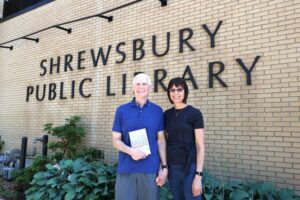
It’s proven to be more than a book. To some, it’s a lifeline. A glimmer of hope.
“There are more than 900 people every day that are new to prostate cancer that are wondering what to do,” said Barron. “I want to tell them that the answer is out there. I’m so happy and so proud that I put this together, and I’m excited to help others.”
In the aftermath of the surgery, Barron – a 30-year Shrewsbury resident – hustled to the Dana-Farber Cancer Institute, a world-class research center in Boston. Restless, nervous, and uncertain, Barron found that accumulating information was one of the only things that could reassure him. He started “reading everything [he] could about prostate cancer.”
His background as a healthcare executive taught him that there’s no such thing as too many opinions. Dana-Farber gave him a unique treatment path – different from what he received before. So he got a third opinion. Then a fourth. Three different nutritionists were consulted.
No stone was left unturned. No citation was left unchecked. Devastation became determination.
“I had to change my mindset from being sorry for myself to trying to find something to do. I spent my career trying to improve healthcare outcomes for people and studying data to do that. So, why can’t I do the same thing and treat myself like the project? I started reading all that I could, and just thousands of studies. Anything I could find,” said Barron.
Throughout all the research, Barron hardly acknowledged the obvious: Google doesn’t have the cure for cancer. Some of the questions he was asking didn’t have answers yet. But when he was unsatisfied with the science, Barron relied on expertise. He found himself on the phone with a Danish urologist, trying to decipher his methodology through broken English.
“Maybe there’s no strong data, but there is data. Become the jury, weigh the evidence,” he said.
Barron’s methods sometimes bordered on the extreme. For the last four years, he has tracked his nutritional intake, sleep habits, and exercise totals. Based on that system, he created a free online health tracker that others can use to monitor their own metrics. When he said he’d make himself the project, he meant it.
And once the bulk of his treatment was over, Barron found another project: creating a book. In his search for information after his diagnosis was delivered, Barron found that reliable information was available, but unassembled. Conflicting opinions led to confusion.
A half-year in, he was “carving his way to clarity.” His wife, Cheryl, read three versions of the book. After late nights and countless hours spent evaluating and corralling information, “Prostate Cancer Warrior” was completed, meant for the 1-in-8 men who will receive a diagnosis in their lifetimes.
“As long as I’m doing this for myself, I might as well be doing this for other people,” Barron said. “It will help me learn it, and it will help others who come after me get the information. I wanted to write the book I wished existed when I was diagnosed.”
Barron came to realize several factors contributed to beating prostate cancer. Treatment, diet, exercise, and sleep are important, but amazingly, Barron discovered that one of the single biggest factors to recovery is inspiration – the belief that your actions can influence future outcomes. In two large, long-running population studies following more than 70,000 adults, individuals who held the “inspiration” belief lived an average of 11 to 15 percent longer.
As Henry Ford said, “Whether you think you can or think you can’t, you’re right.”
In an effort to get the information to anyone who needs it, Barron released a free 30-page flyer that condenses his book’s most important takeaways. Friends have already reached out to him saying that, after reading the book, they’ve decided to get treatment.
One man’s most painful moment is helping other men through theirs.
“It feels unbelievable. Incomparable. I keep the book in my kitchen, and every once in a while I’ll just go and hold it. I can’t believe I’ve been able to have such a positive impact on people, and to be able to comfort people at a time of such vulnerability,” he said.
Find the book here, or find a free PDF guide here.
RELATED CONTENT:
Westborough Native Authors Book on Marine Corps Experiences
Shrewsbury author’s book produces a plethora of additional stories about ‘Spag’s’
Hudson Author Honors Community Member Jean V. Beddow-Arnth