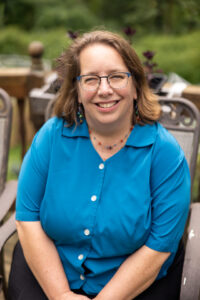
By Marianne Lyons Delorey, Ph.D.
“The truth is, job titles are temporary. But purpose is infinite.” — Elaine Welteroth
I have always been intrigued by a famous story about President Kennedy when he went to visit NASA. He started talking to the people who worked there and at one point, he stopped someone with a broom and he asked him, “And tell me sir, what do you do here?” The janitor replied with pride in his voice, “Why Mr. President, I’m helping to put a man on the moon!”
I may never know how accurate this story is, but it has left me with very conflicting feelings. On the one hand, I feel a great sense of joy and justice that the worker identified with the mission of the agency. On the other hand, why is this such a surprise to people? Of course he finds meaning in his work. How classist to think otherwise!
But, then again, I was raised by a firefighter – the hero of the blue collar workers. Someone whose job gives ultimate meaning but who (like a lot of hands on-workers) dedicates their body to the profession until it cannot give anymore.
Eldercare is much like many other undervalued, hands-on work – the work is physically demanding and the toll on the body is intense. Depending on the clientele, there can also be a strong emotional connection or an emotional hardship every day as well.
Our eldercare workers are the backbone of our industry and yet when we think of people who are mission-driven, that is not what comes to our minds. While I am not a direct care worker I do work in eldercare. That is how I define myself at my core. When I meet someone new and they ask me what I do for work, depending on the situation, I may say any number of different things:
- Property Manager
- Elder Housing Specialist
- CEO
- Nonprofit Administration
- I take care of older people
Recently, I was at a party, and I spent some time with someone talking more in depth about what I do. Later that day, she overheard me giving the simplified version to someone else: “I take care of older people.” She ran over (thinking I was being modest) and said, “That’s not all, she is the executive director of a nonprofit affordable housing organization!”
I corrected myself and although I got away with looking humble, I thought a lot about why I said what I did. I decided it was:
- Simpler, depending on the situation
- Humbler
- But also connected me to the mission of WHY I do what I do.
And I think this is the core of what I meant. I think humans inherently want to find value in their work. This is as true for janitors as it is for CEOs. I also think the language we use helps identify our values. Consider these job titles and their corresponding value statements:
I am a carpenter: I create homes
I am a computer technician: I keep people safe from cyber attacks
I am a mechanic: I diagnose car trouble and keep people safe
I am a receptionist: I make people feel welcome
I am a server: I make sure our customers get the nutrition they need to stay healthy
Perhaps we as a society need to shift away from one- and two-word job titles to the impact we are making. Perhaps then our eldercare workers will get the praise they deserve.
Marianne Lyons Delorey, Ph.D. is the executive director of Colony Retirement Homes. She can be reached at 508-755-0444 or [email protected] and www.colonyretirementhomes.com.
RELATED CONTENT: