By Matt Robinson
Contributing Writer
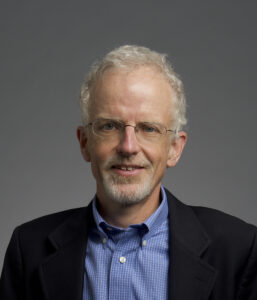
REGION – Evan Hadingham, who grew up in post-World War II England, has had an enduring interest in writing about and researching both technology and ancient history since childhood.
As the son of a father who was a Royal Air Force squadron leader who also ran a print shop and a mother who was “an excellent writer and editor,” Hadingham had an early interest in aircraft and the means and support to tell others about it in an intelligent (and well-edited) way.
Aviation history interest
“I grew up with a deep interest in aviation history,” said the avid model plane enthusiast who had assembled an impressive scrapbook of aviation articles and images in celebration of the 50th anniversary of World War I. “One day, when I was at home from school with a cold, I wrote a rather obnoxious letter to a well-known London publisher, pointing out minor errors in one of their books and mentioning my scrapbook. They asked me to come in and show it to them.”
After the publisher adjusted to the idea of his ersatz editor being 13, he asked Hadingham to write a book about WWI aircraft.
“For the next three years,” Hadingham recalls, “I researched and wrote a reference book on WWI triplanes.”
In addition to intensive academic research and visits to many libraries, museums, and other venues, Hadingham had the privilege of interviewing some of the last living pilots from the very missions he was chronicling.
“I have vivid memories of talking to those ex-pilots,” he maintained, noting that, as many of them had enlisted illegally when they were technically too young, he could relate to doing what people did not expect boys to do at such an early age.
“It was easy for me as a teenager to imagine myself in their shoes,” he said, “facing deadly peril in the skies every day either from combat or their unreliable aircraft.”
While interviewing a pilot may not be as harrowing as being one, Hadingham would go on to be actively involved in many missions and studies that were more first-person. He would eventually come to be one of the most respected resources for others who wanted as close to first-hand experience as possible.
“I seem to have always had wide interests in science, technology, and ancient history,” Hadingham said. While in middle school he produced a limited edition (as in one copy) typewritten science magazine called Discovery that (with the help of his father’s print shop) was expanded during his high school years into a “more general newsletter” called Troubadour.
“I always had strong support for my early literary efforts,” he said gratefully.
With the support of his parents, Hadingham pursued writing for many years, expanding his repertoire even further to include books and then documentaries.
Archeology career
“After college,” he explained, “I alternated writing popular books about archaeology and prehistory with laboring on archaeological sites in the UK and France. I also took an MA degree in prehistory and archaeology at the University of Sheffield, which was very important for grounding my understanding of scientific research.”
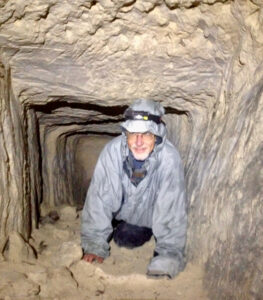
One of his early post-college efforts resulted in the book, “Secrets of the Ice Age.”
“I visited and photographed cave art inside about 50 caves in France and Spain,” he recalled, noting that many of them were closed to the public. “These underground encounters with mysterious works of cave art were among the most memorable experiences of my twenties.”
Working for Nova at WGBH
When that book was done, Hadingham jumped across the pond from one Cambridge to another and has been on our side ever since. Though he continued to work with other organizations, Hadingham made what may be his most profound mark working with the talented team at WGBH that produced the award-winning science program Nova.
“I was privileged to be part of the amazing creative community at WGBH for nearly three decades,” he smiled. “One contribution I’m particularly proud of is helping to create the genre of hands-on experimental archaeology programs, which led to the hugely popular series ‘Secrets of Lost Empires.’”
Hadingham’s time at WGBH not only allowed him to dig deep into other interests but also to transition from print to broadcast.
“In 1986, I was awarded a Macy Fellowship in science broadcasting at WGBH,” he said. “This gave basic training in radio and TV to print science writers.”
Hired as Nova’s science editor in 1988, Hadingham was now responsible for pretty much every part of the series. And while others might have been overwhelmed, he embraced the challenge and the learning that resulted.
“Producing and writing narration for documentaries teaches you that every word counts,” he observed, “and that you can nearly always find simpler and more vivid ways to express the same thing.”
This experience (which Hadingham cites as “the best discipline there is if you want to communicate effectively in any medium”) led to other opportunities, including an invitation to contribute to a book that was being put together by the Leakey Foundation (which had also launched the legendary career of the late Dr. Jane Goodall.)
“[They] commissioned me to write…a book celebrating their 50th anniversary…in 2021,” Hadingham explained, noting that he was able to produce 50 essays on the top discoveries in human origins and primatology during just two days a week (which was apparently all his team at Nova could afford to spare for him). “The book involved talking to all the leading scientists in this fascinating area of research, and was a demanding but thrilling labor of love…. It was like going back to college, both a lot of pressure and an amazing learning experience!”
Though he is officially retired from WGBH, Hadingham still offers part-time editorial consulting. He also maintains ties with the Leakey Foundation by writing for them and serving on their Advisory Board for Communications.
“I never planned any of this career trajectory,” Hadingham admitted. “I simply followed my abiding interests and was very lucky that they led not only to a solid career path but offered opportunities to travel widely…and to write.”
RELATED CONTENT:
Administrator Honored for Career in Science Education
Robert H. Goddard: The Pioneer of Modern Rocketry
Women from Massachusetts colleges served as code breakers during World War II