By Sharon Oliver
Contributing Writer
WORCESTER – For over a century, shredded wheat has been a staple breakfast cereal among healthy eaters. But did you know that Worcester was where shredded wheat was first mass-produced for consumers?
It has long been said that breakfast is the most important meal of the day. However, what one eats for that extra boost of energy is entirely up to them. While some may enjoy a not so healthy but tasty choices like pork bacon or sausage, others lean towards more heart healthy options. One such option is shredded wheat, which was invented by Henry Perky in 1890 in Denver, Colorado.
Worcester factory
After Perky received a U.S. patent in 1895, he and his wife moved east where he opened his first bakery in Boston and then to Worcester where he established and retained the name of The Cereal Machine Company, later known as the Shredded Wheat Company. His manufacturing factory was originally located in Worcester’s Junction Shops at 57-59 Jackson Street and remained there until 1902.
The neighborhood is now designated on the National Register of Historic Places, and includes Jackson Street, Beacon Street, Hermon Street and the railroad. The original building has since been converted to apartments.
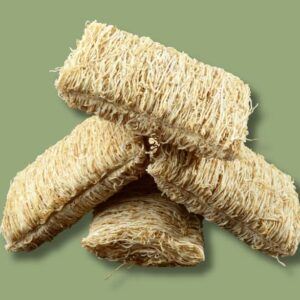
Despite claims that the Shredded Wheat Biscuit was “the Wonder of the Age,” a cure-all for societal and personal woes, the little brown pillows had a rough start in enticing consumers. In order to get grocery stores to stock Shredded Wheat, Perky began publishing millions of booklets about his product.
Described as a devout vegetarian who believed that good health came from simple, wholesome foods, Perky developed the shredded wheat as a digestion aid. The pillow-shaped biscuit cereal is available in three sizes: original, bite-sized (¾×1 in) and miniature. Both smaller sizes (“mini wheats” and “little bites”) are available in a frosted variety, which has one side coated with sugar and usually gelatin.
Some manufacturers have produced “filled” versions of the bite-size cereal containing a raisin at the center, or apricot, blueberry, cherry, cranberry, raspberry or golden syrup filling. Mass-produced in Worcester, Shredded Wheat became Worcester’s crunchy claim to fame.
Cynthia Gosline Finkle shared on Facebook, “Being from an old Worcester family, I have a fond memory of my father enjoying his shredded wheat with hot milk and melted butter. Did not know it was originally from Worcester.”
Offer from competitor
Shredded Wheat was so popular that cereal giant Will Kellogg of the Kellogg Company offered to buy Perky’s patent for $100,000, but Perky wasn’t interested. Unfortunately, that decision would cost him and opened the door for Will Kellogg and C. W. Post to take over reigns in the business of cereal manufacturing. In 1901, the board of the company Perky created forced him to sell his interest in the venture for just $150,000.
Jim Holechk describes Perky in his 2006 book, “Henry Perky: The Shredded Wheat King” as an eccentric businessman who was always on the lookout for his next big deal and had turned to none other than business magnate William Henry Ford for advice on creating a machine to do the work and to shape the resulting filaments into biscuits. The two secured utility patents for both the machine and the product in 1895.
After the Shredded Wheat patent expired in 1912 (six years after the death of Henry Perky), Will Kellogg’s brother John Harvey saw it as the perfect opportunity for Kellogg to produce its own version of the breakfast biscuit. He obtained a patent on the biscuit in 1915, and Kellogg’s Shredded Wheat was born.
A big believer that men and women were the product of what they ate, Perky attributed the Civil War to the pie eating habits of the Pilgrim fathers. He also characterized eating ordinary bread as a crime against civilization, bald heads and false teeth were the results of eating unnatural foods and that children got their morals from their diet.
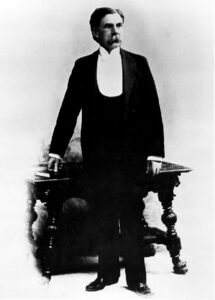
Perky was also the president of Oread Institute on Castle Hill, a former school in Worcester that was considered to be the first institution of its kind exclusively for women. The cereal is celebrated and remains in the collection of the Museum of Worcester, with two glass jars containing shredded wheat prototypes dating back to Sept. 26, 1946.
RELATED CONTENT:
Worcester was the birthplace and is still the home of Table Talk pies
Coney Island Hot Dogs has been a Worcester institution for more than a century
Necco’s sweet journey of creating classic candies began in Boston