By Sharon Oliver
Contributing Writer
BOSTON – Although it’s probably not a milestone widely known outside of the medical profession, did you know that October 16 is Ether Day? It commemorates the first public demonstration of it on October 16, 1846, as an anesthetic, during an operation performed in Boston at Mass General Hospital 180 years ago this month.
Bitter feuds
The use of ether as a surgical anesthesia caused quite a stir back in the 1800s. Not for its usage, per se, but calling dibs on first to administer it resulted in bitter feuds and publishing of findings as a sort of bragging rights. However, Charlton-born dentist William Thomas Green Morton is credited for performing the first public demonstration of ether anesthesia.
Morton entered Harvard Medical School in 1844, where he attended lectures given by Charles T. Jackson, the chemist who introduced him to the anesthetic properties of ether. Shortly afterwards, he carefully conducted a series of experiments with ether on animals, observing its effects with a keen focus on understanding of how it could be used in a controlled manner.
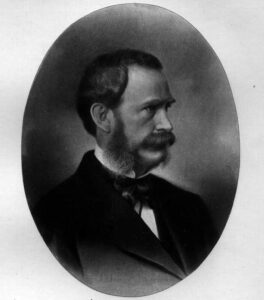
Early experiments were promising. Pleased by the results, Morton tested ether on himself. It was a daringly risky move, but he wanted to prove his commitment to his research.
Public setting for surgery
After Morton giving ether to a patient for a painless tooth extraction in 1846, Boston surgeon Henry Jacob Bigelow arranged for a public demonstration of Morton administering the compound at the operating theatre of the Massachusetts General Hospital (MGH). Unaware that renowned Georgia surgeon Crawford Long was the first to use sulfuric ether as an inhalant anesthetic yet knowing that demonstrating the effectiveness of ether in a public setting was a significant way to gain the recognition and acceptance of the medical community, Morton was happy to oblige. On October 16, 1846, surgeon John Collins Warren painlessly removed a tumor from the neck of Edward Gilbert Abbott after Morton induced the ether and news of its proven use was rapidly spread across the globe.
Knowledge of anatomy has always been necessary for surgeries such as leg amputation, for example, but patients were often sedated with opium or plied with alcohol and tied. However, patients were still not without pain until the introduction of anesthetics revolutionized medical procedures.
Photo/Wikimedia Commons
The now-famous dentist tried to obtain exclusive rights to the use of ether anesthesia, and this led to contention with his mentor Charles Jackson, who claimed priority in the discovery. Further opposition came from Morton’s former dental partner Horace Wells who unsuccessfully demonstrated anodyne properties of nitrous oxide (laughing gas). Morton’s application to Congress for “national recompense” of $100,000 was complicated and basically denied thanks to claims of Jackson and Wells as discoverers of ether. Nevertheless, the feud between William Morton, Horace Wells and Charles Jackson helped to raise the profile and further awareness about ether for pain management.
Meanwhile, Crawford Long started the process of documenting the details of his experiments, collecting patient accounts, and notarizing their letters. Long published his findings after learning that Jackson and Wells were staking an ether claim.
Morton’s sad demise
In 1868, Morton and his wife were riding in a carriage in New York City when he suddenly demanded the carriage be stopped. He ran into the lake in Central Park to cool off. Morton was actually suffering from a major stroke (which later proved fatal) and was taken to nearby St. Luke’s Hospital. His wife reported that upon recognizing her husband, the chief surgeon made the following remark to his students: “Young gentlemen, you see lying before you a man who has done more for humanity and for the relief of suffering than any man who has ever lived.” She then produced three medals, saying that the medals were all he had ever received for his work.
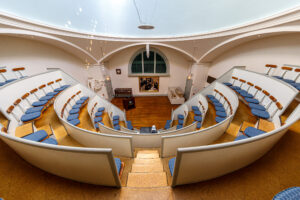
The MGH theater eventually became known as the Ether Dome and has been preserved as a monument to the historic event. Since that historic day in 1846, October 16 has been designated as Ether Day.
RELATED CONTENT:
Worcester City Hospital served residents for over a century
MIT Professors’ Roulette-Beating Device
A Melted Candy Bar & the Microwave Oven’s Invention