By Sharon Oliver
Contributing Writer
SPRINGFIELD – Born Aurore Dolores Daigle in 1893 in Springfield, Ora Nichols was the first and only female to head a sound effects department during the golden age of radio. She, along with Amelia Earhart, Kate Smith and Eleanor Roosevelt were ranked as some of the most influential women at the time and “Radio Stars” magazine named her one of the “Nine Greatest Women in Radio” in December 1934.
Start in vaudeville
She and husband Arthur Nichols started out in vaudeville in 1905 as musicians with Arthur playing the violin and Ora on piano. Nichols, who believed the best sound effects came from sources other than the object itself, employed techniques such using an egg beater to mimic the hum of a lawnmower, clanking metal to create alien sounds, chopping cabbage to fool listeners into believing they heard a decapitation and banged on an air conditioner vent to imitate the sound of rockets.
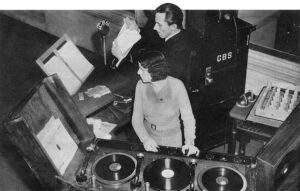
Nichols built a one-of-a-kind, giant cube of a sound machine with pneumatic pumps, whistles and engines that could perform hundreds of sounds ranging from gun fire to birds chirping. As head of the Columbia Broadcasting System (CBS) sound department, she supervised six men and concocted 1,000 sounds.
Some of her most significant work was with actor and filmmaker Orson Welles. In “The March of Time,” she tapped out the “SOS” signal on a telegraph key and provided sound effects for “The Mercury Theatre on the Air.” As the head sound engineer at CBS, Nichols curated the sound effects for Welles’ broadcast of a “desert play.” She designed, created and performed sound effects, using a “sand box” while the actors were walking, for ambiance. Welles had a problem with the sandbox looking like a cat’s bathroom, so he filled the whole floor of the studio with sand from Coney Island. However, the mics picked up too much feedback from the use of real sand.
Clashes with Orson Welles
Their differing ideas continued. Being a realist, Welles wanted a man with a mower in the studio if there was to be a lawn being cut in the radio play. Ora, on the other hand, worked in metaphor. She knew Argo cornstarch when pressed rhythmically, sounded like foot falls in snow.
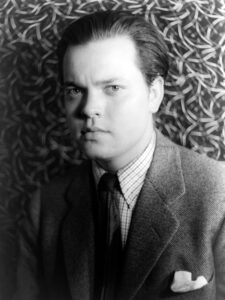
Photo/Library of Congress/Carl Van Vechten
During the production “The War of the Worlds,” a 1938 Halloween episode of the radio series “The Mercury Theatre on the Air,” Nichols and Welles famously clashed. Welles argued about how to produce sound effects, wanting to use actual sounds instead of manufactured ones.
He angrily called Nichols a “screwball,” prompting her to throw off her headphones and walk out of the studio with airtime rapidly approaching for the live CBS Radio Network broadcast.
Welles quickly apologized (which Nichols demanded) and subsequently wrote her a note saying: “Dearest Ora: Thanks for the best job anybody could ever do for anybody. All my love, Orson.”
The first half of the program was delivered in a realistic “breaking news” format. The “Mercury Theatre on the Air” had few commercial interruptions. The first break came after fictional reporters had described a devastating alien invasion and the fall of New York City, inciting a panic among radio listeners who were convinced that a Martian invasion had actually taken place. Following widespread media outrage, Welles apologized at news conference the next morning, and no punitive action was taken.
The broadcast and ensuing publicity brought the then-23-year-old Welles to the attention of the general public and gave him the reputation of an innovative storyteller and “trickster.” To her credit, Nichols provided much of those believable sounds that made an audience think little green men were here.
Ora Nichols died in Richmond, New York in 1951.
RELATED CONTENT:
Radio personality Ken Meyer’s disability never got in the way of his success
The Magliozzi Brothers of Cambridge: How ‘Car Talk’ Became a Radio Hit