By Sharon Oliver
Contributing Writer
BOSTON – The death of reggae pioneer Jimmy Cliff last November cannot pass without saying how much of an impact he and reggae music had in the Boston-Cambridge area during the 1970s. The musical peer to another legend, Bob Marley, died on November 24, 2025, following a bout with pneumonia. He was 81.
Jamaican films sparked interest
No one could have possibly guessed how reggae would infiltrate into the lives of white middle-class Boston and Cambridge college students following the release of two Jamaican movies that featured reggae music. One flick in particular, “The Harder They Come,” which was released in 1972 and starred Jimmy Cliff, remained a strong cult favorite with locals for years.
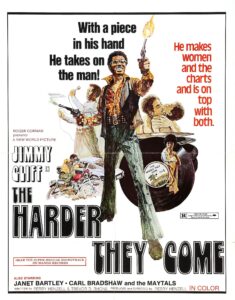
So much so that it was the longest running film in the history of the Boston area at the time with an estimated 250,000 moviegoers having seen it since its release at the now-closed Orson Welles Cinema in Cambridge. Oftentimes patrons stretched out the door and down the block. According to the projectionist, Hal Wagner, the film’s attraction was largely due to word of mouth. In an old Boston Globe article, he said, “People just keep coming. And they keep coming back.” One teenager admitted to having seen the film 35 times. Another teen named Martin Restovich even claimed the movie was “his gospel” and wondered what he would do next.
Loosely based on real-life Jamaican criminal, Ivanhoe Rhyging, Cliff portrayed the spree killer, tracing his arrival in Kingston, Jamaica as a country boy, drawn to the Jamaican music business but who ends up in the ganja trade. Filmed on a shoestring budget, the movie features Cliff delivering the title tune and is famously credited for a reggae soundtrack that is said to have “brought reggae to the world.” Moreover, Cambridge with its student counterculture became one of the first U.S. cities associated with reggae. The association between reggae and marijuana smoking probably endeared it with local students as well.
The soundtrack album played a major role in popularizing reggae in the United States and globally. In 2003, the album was ranked number 119 on Rolling Stone magazine’s list of the 500 greatest albums of all time.
Early Bob Marley concerts and radio shows
The film’s success prompted Island Records honcho Chris Blackwell into signing Bob Marley and the Wailers and the first place they headlined was Cambridge’s Paul’s Mall for a five-night residency in the summer of 1973. Adding to the excitement, fans of this Caribbean blend of rhythm and blues, calypso and jazz were able to listen to live broadcasts of the shows on WBCN radio. Wailers bass player Aston “Family Man” Barrett would later recall the Paul’s Mall shows as among the best the band ever played, and the Boston crowd as the most hospitable. The Wailers would return to the same venue two years later, playing to two packed shows each night for a seven-night residency.
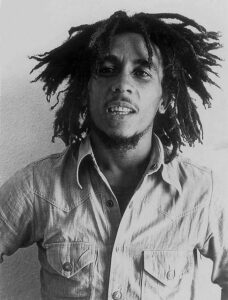
Photo/Wikimedia Commons/Dennis Morris
At the time, “Reggae Bloodline” on WGBH was the most popular local radio outlet for reggae. It was hosted by Carly Simon’s brother Peter Simon after a trip to Jamaica made him want to spread the word of Jah to Boston. It was the first reggae show in the Northeast.
In 1978, WERS 88.9 premiered “Strictly Rockers” (later “Rockers”), a weekly two-hour-long reggae showcase hosted by Doug Herzog, future president of MTV Networks. It was the station’s highest-rated program. That same year, Bob Marley and the Wailers entertained a crowd of nearly 20,000 at Soldiers Field stadium for a benefit concert.
Boston was ripe with racial tensions, but folks of all stripes came together, if only for a moment in time, at a club called Western Front where reggae nights were always crowded. According to Boston music journalist Noah Schaffer he told radio station WBUR, “Boston’s reggae scene was somewhat famous for being one of the only integrated scenes in a time [in] which integrated cultural activities simply didn’t happen.”
The world may have lost legendary reggae artists like Bob Marley, Bunny Wailer, Peter Tosh and Jimmy Cliff but their creative influence still remains.
RELATED CONTENT:
Boston Tea Party concert venue featured iconic 1960s rock bands
The Bosstown Sound was a short-lived attempt to market local psychedelic rock
Boston’s legendary rock club ‘The Rat’ is still remembered fondly