By Sharon Oliver
Contributing Writer
BOSTON – Thanksgiving is celebrated every fourth Thursday in November thanks to magazine editor and author Sarah Josepha Hale. The New Hampshire native’s advocacy for the holiday began in 1846, with a pile of letters written to every U.S. president from Zachary Taylor to Millard Fillmore to Franklin Pierce and James Buchanan. She was finally able to persuade Abraham Lincoln into supporting legislation establishing a national holiday in 1863. At the time, the country acknowledged only two federal holidays: George Washington’s birthday and Independence Day.
From regional to national holiday
In 1827, Hale published the novel “Northwood: Life North and South.” The book’s success led to her hiring as editor of Godey’s Lady’s Book, the largest women’s magazine before the Civil War and a position as editor of Boston’s new publication, the Ladies’ Magazine (later, the American Ladies’ Magazine) in 1828.
In 1833, Hale founded the Boston Ladies Peace Society and the Seaman’s Aid Society which assisted surviving families of Boston sailors who died at sea. She famously championed and helped with the completion of the Bunker Hill Monument, using the $30,000 generated from a huge women’s craft and bake sales fair held at Quincy Market.
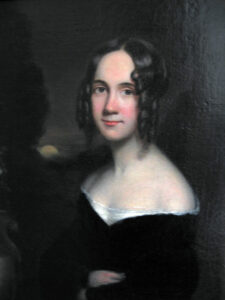
During this time, only New Englanders celebrated “Thanksgiving,” but the six states scheduled its their own dates to celebrate, ranging from October to January. It was a regional holiday, as northeastern U.S. states had declared civil holidays of thanksgiving in autumn since the 1810s. Hale believed a national holiday would unify the country following the effects of the Civil War, but how would one celebrate this Yankee tradition?
Using what would become a template from her book “Northwood: Life North and South,” she described a white damask tablecloth with every child having a seat; “The more the better, it being considered an honor for a man to sit down to his Thanksgiving dinner surrounded by a large family.”
A letter to Lincoln
A roasted turkey (stuffed and basted) would take center stage at the head of the table. Other items include pork legs, mutton, sirloins, vegetables, gravy, a goose, ducklings, pickles, wheat bread, preserves, and chicken pie. For dessert, the “celebrated” pumpkin pie. Every setting had a wine glass and two tumblers. A serving of plum pudding, custard, pie, cake, sweet meats and fruits for dessert is suggested and all topped with homemade mild spirits: currant wine cider and ginger beer for drinks.
Hale’s letter to Lincoln dated September 28, 1863, began with:
“Sir, permit me, as Editress of the ‘Lady’s Book,’ to request a few minutes of your precious time, while laying before you a subject of deep interest to myself and – as I trust – even to the President of our Republic, of some importance. This subject is to have the day of our annual Thanksgiving made a National and fixed Union Festival. You may have observed that, for some years past, there has been an increasing interest felt in our land to have the Thanksgiving held on the same day, in all the States; it now needs National recognition and authoritative fixation, only, to become permanently, an American custom and institution. Enclosed are three papers (being printed these are easily read) which will make the idea and its progress clear and show also the popularity of the plan…”
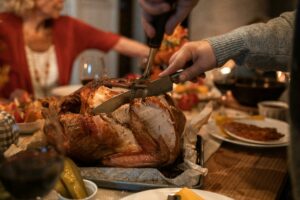
The then-president liked Hale’s idea. On October 3, 1863, Abraham Lincoln issued a proclamation declaring the last Thursday of November to be National Thanksgiving Day and ordered all government offices in Washington to close on that day. The holiday’s customs have evolved over time to include charitable organizations offering Thanksgiving dinner for the homeless, attending religious services and watching or participating in parades and football games.
RELATED CONTENT:
Cranberry scare tanked Thanksgiving sales in 1959
The best places to visit in Massachusetts around Thanksgiving