By Sharon Oliver
Contributing Writer
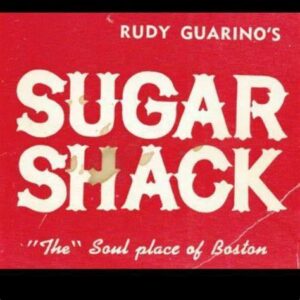
BOSTON – Boston’s Sugar Shack music nightclub opened as one of the “chitlin circuit” outlets where African American artists could perform, but it exploded into something much more than a place to hear sweet soul music.
Staffed by local Italian-Americans, The Sugar Shack was located on 110 Boylston Street and owned by Rudy Guarino, who had fallen in love with soul music as a youngster. His brother “Sticka” manned the door and ordered the alcohol. Since the façade was partially obscured by the Colonial Theater marquee, one would have to know about the Shack to know where to go.
Black music haven
Eddie B., Charlestown’s unofficial soul music ambassador called it the “best venue in the history of the city of Boston for Black music.” He also remembered the first time Chi Lites played there but no one knew who they were. Six months later, their hit single “Oh Girl” took over the airways and the next time the Chicago-based group came to the Shack, people lined up outside waiting to get in. The only groups who did not play there were The Supremes and The Temptations. Psychedelic funk rock band Parliament-Funkadelic performed there early in their career and allegedly were so broke at the time that they camped out on Boston Common.
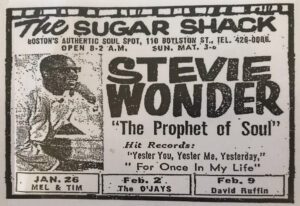
Other standout shows include James Brown, Wayne Cochran, Ray Charles, The Dells, The O’Jays, Stevie Wonder, Gladys Knight & The Pips, The Four Tops, Sly and The Family Stone, New England’s own Tavares (then known as Chubby & The Turnpikes) and The Ambitions. The Shack also offered a matinee on Sundays for kids 12 through 17 for only a dollar.
Frankie Valli crooned at the Shack. Jeff “Skunk” Baxter proved his guitar prowess at the club. He later hooked up with Ultimate Spinach, co-founded Steely Dan and then joined The Doobie Brothers in 1974. The club’s 13-piece house band was led by drummer-songwriter-producer Herschel Dwellingham, who was known as “Boston’s Number One Soul Man.”
Breaking racial barriers
With music that had the power to unite, the nightclub broke racial barriers. Everyone was welcome at The Sugar Shack. In fact, it did attract patrons from all walks of life including Black underworld figures along with the notorious “Whitey” Bulger and “Jimmy the Bear” Flemmi, who were frequent visitors. Former bartender Jerry Maffeo was also in charge of keeping the Mob quiet and behaving, ensuring everyone could have a good time.
Several people shared memories on YouTube including Etten99, who wrote:
“In the late 60s my sister went to college in Boston and made friends with the Sugar Shack’s owner’s daughter. She invited my sister for a yummy Italian dinner with her family. My sister got The Delfonics a gig at the Sugar Shack and we never had to pay! We knew most of the groups that appeared coming from the Apollo in New York. I miss the Sugar Shack & the Boston Tea Party club too! I used to play keyboard at 14 years old, and Joe Jackson heard me jam with the Jackson 5 in their dressing room and he wanted me to play keyboard for the Emotions!
I knew I was too young to live out of a suitcase and declined the offer. Besides, it was more fun having impromptu jam sessions backstage with different groups and hanging out with them. My dad was a jazz musician, and his best friend was Apollo’s backstage head of security and he’d let me in backstage to meet all the acts.”
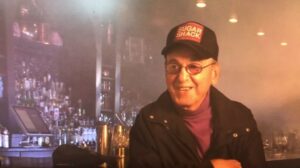
The Sugar Shack opened in 1965 and closed in 1977. Owner Rudy Guarino passed away in 2020 at the age of 91 in Las Vegas where he and his family had moved years ago. Many of the artists who performed at his club became lifelong friends.
RELATED CONTENT:
Narcissus left its mark on Boston’s club scene
Paradise Rock Club is one of Boston’s most storied music venues
Boston’s legendary rock club ‘The Rat’ is still remembered fondly