By Colin McCandless
Contributing Writer
DARTMOUTH – A popular amusement park destination from the 1920s up through the mid-1980s, Lincoln Park in Dartmouth created fond childhood memories for generations of kids. But it also endured more than its fair share of calamities and tragedies.
Started as municipal park
Lincoln Park originally started out in 1894 as a municipal park along a trolley line between Fall River and New Bedford with picnic tables, barbeque grills, and a playground where families gathered. In the 1920s it transitioned into an amusement park that would ultimately include a rickety wooden roller coaster called the Comet, merry-go-rounds, dodgems (bumper cars), midway games and a Ferris wheel, tilt-a-whirl, fun house, roller rink and penny arcade.
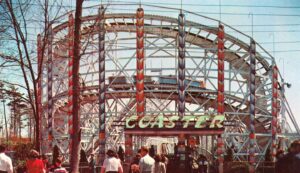
Photo/ArtInRuins.com
According to the website artinruins.com, it also featured a ballroom that stayed open year-round. It hosted dances and welcomed performers such as the Three Stooges and singer Connie Francis, as well as politicians including John F. Kennedy and George Wallace. A video shared to YouTube entitled “Memories of Lincoln Park” interviewed former park patrons who recalled seeing pop music idols of the day like Bill Haley & His Comets and Frankie Avalon play shows there in the 1950s and 1960s.
John Collins & Associates bought Lincoln Park in 1941 for $40,000. The group invested in upgrades and improvements, installing a 14-lane bowling alley, updating the existing dance hall and adding further amusement park rides.
While the Comet roller coaster typically served as the main attraction over the years, guests also raved about the Monster Ride (originally known as the Mystery Ride), a two-story dark ride with paper mâché creatures. Many folks enjoyed the Round Up as well, though it had a reputation for inducing nausea among those prone to motion sickness.
Memories live on
A member of the Lincoln Park Dartmouth Facebook group, which commemorates the park through photos and recollections, posted a picture of the original monster from the Monster Ride, which he announced he will be preserving for posterity through a restoration project.
The page features hundreds of comments under photos of park rides, signs and memorabilia, illustrating the extent to which people still cherish this place nearly 40 years after it closed, and how eager they are to reminisce with others about their childhood experiences there.
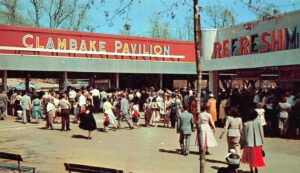
Photo/ArtInRuins.com
Not only did Lincoln Park provide endless sources of kids’ entertainment, but the admission price was affordable even for big families. To these folks, it represented more than just an amusement park, it comprised some of their happiest early memories and made a lasting impression.
Multiple commenters enthusiastically divulged that their parents first met at Lincoln Park, whether at the roller rink, the bowling alley or the ballroom. Additionally, scores of videos exist online that memorialize different rides in the park or depict photo montages of the grounds over the years.
Of course, part of the nostalgia of any amusement park is the food, and the clam cakes once served at Lincoln Park’s Clambake Pavilion are celebrated by many former parkgoers as a delectable item they still crave to this day.
Decline and disasters
Lincoln Park survived for more than 60 years until attendance dropped as bigger theme parks diverted crowds away, and the owners began grappling with tax debts.
The iconic amusement park maintained its appeal into the 1980s, as illustrated in an August 1982 video of Lincoln Park posted to YouTube showing kids enjoying contemporary arcade games like Pac-Man and Asteroids and playing Skee-Ball. As it pans out to the grounds, children laugh and shriek with joy as they whirl and zip around on various thrilling rides.
However, there are some macabre chapters in its history, especially towards the twilight of its existence.
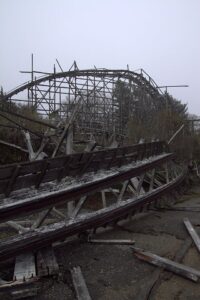
Photo/Wikimedia Commons
According to a 2012 article published in Wicked Local, in 1975 the Westport Board of Health ordered Lincoln Park to upgrade its waste treatment facilities, after discovering it was discharging some of its waste into a brook that fed into the Westport River. Then came the fires and fatalities.
An intentionally set fire destroyed two buildings in the park in 1978. Wicked Local recounted: “It took 60 firefighters and 10 engines from Dartmouth and Westport to bring the blaze under control.”
The publication further related how on March 6, 1982, night watchman Raymond C. Santos was murdered at the park after refusing to give an intruder the keys to its safe. He threw a knife at the perpetrator, who then shot and killed Santos with a stolen shotgun.
A second fire occurred in May 1982, when a person deliberately set aflame the paper mâché wall coverings among the monster displays in the Monster Ride. In June 1983, the avalanche of dire incidents continued as large painted backdrops on the Himalaya Ride fell on the riders, injuring six teenagers.
Another tragic park-related fatality occurred in August 1986 when an electrician named Michael West fell 55 feet to his death while working on the roller coaster.
Lincoln Park closed for good in 1987. Some of its rides were auctioned off, such as the carousel, with its chariots and hand-carved horses. It is now located at the Fall River waterfront overlooking Battleship Cove. The city celebrated a revamped version of the Fall River Carousel with a grand opening last year over Memorial Day weekend. It’s been entertaining new generations of youngsters here for 34 years. Additionally, the Ferris wheel was moved to the New Bedford waterfront where it still resides today.
Destruction and redevelopment
Yet 1987 didn’t mark the end of disasters wreaking havoc on what at this point was beginning to seem like a cursed site. Successive arsonist fires in 1991 and 1993 devastated first the ballroom and seven other buildings, and later the pavilion and some food concessions. Another conflagration damaged part of the Comet. By 1997, a total of five fires had ravaged more than 90 percent of the buildings at Lincoln Park.
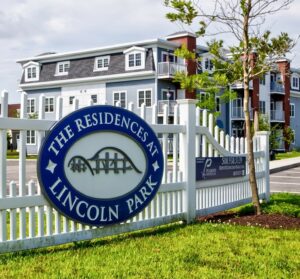
Its structures lay in ruin and decay until finally being removed in 2012, which included the demolition of the beloved Comet. The land was redeveloped for housing and is currently the site of The Residences at Lincoln Park, a mixed income residential community. In a nod to its predecessor, a roller coaster adorns the community’s logo.
RELATED CONTENT:
White City Amusement Park in Shrewsbury: A Nostalgic Look Back
Paragon Park drew crowds to Nantasket Beach for 80 years
Whalom Park in Lunenburg promised “a whale of a time”