By Sharon Oliver
Contributing Writer
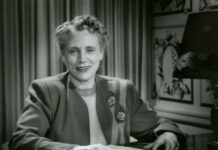
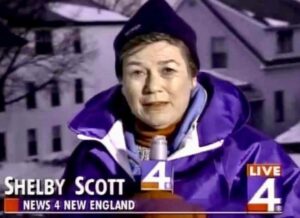
BOSTON – Former WBZ reporter Shelby Scott is known for being one half of the nation’s first all-female anchor team (with Gail Harris in 1976) and for taking the Boston area by storm for her unique weather coverage. The Seattle native began her career in her hometown where she was the city’s first female newscaster before moving to Boston in 1965 to work for WBZ-TV.
Scott’s first major assignment for the station was covering the Northeast blackout of 1965. The blackout affected parts of Ontario in Canada, Connecticut, Delaware, Maryland, Massachusetts, New Hampshire, New Jersey, New York, Pennsylvania, Rhode Island and Vermont.
An inspiration and force of her own
A force to be reckoned with, Scott’s former news director Peter Brown told The Boston Globe, “Shelby, as much as she would not want me to say it, was a pioneer – she was a trailblazer in journalism. She was a mentor. She inspired so many women and men who wanted to work into TV news. I saw her smile at the line from the young reporters: ‘Shelby, I grew up watching you on TV.’”
Viewers could associate Scott’s legendary snowstorm coverage by her winter hats. A red cap indicated that people should remain indoors because the weather was going to be brutal, while a blue hat meant be careful and a white one meant the storm was not much of a concern. Locals took to Facebook to post their memories.
Sylvia J. Bolton wrote:
“You knew it was going to be bad when Shelby Scott made an appearance!”
John Holleran recalled:
“Growing up in Mass if it was a big storm, Shelby was reporting and Don Kent was drawing on the map.”
Gwen Wilcox added:
Iconic presence and leader
“It wasn’t a ‘real’ story unless they assigned Shelby to it. Do you remember the year The Boston Globe used her and Robert Parrish as snow accumulation guides? Shelby was buried pretty early on (at under five feet) but Parrish hung on for a few more weeks.”
During those cold, harsh winter days, fans would bring Scott coffee and doughnuts if they spotted her on location. Being 62 inches tall, the Globe sometimes compared her height to snowfall accumulations, wondering if the city would get a “2-Shelby winter.”
Although she used hats to alert viewers on weather conditions, Scott was not crazy about the amount of attention paid to how women in broadcasting dressed. She said in a 1971 interview, “It’s unfair to judge me on what I’m wearing, rather than on my reportorial job.”
Scott was elected president of the American Federation of Television and Radio Artists (AFTRA) in 1993 and served in the role until 2001. She also helped spearhead the movement to fuse AFTRA with SAG (Screen Actors Guild).
Longtime WBZ news photographer Nat Whittemore once said his colleague was afraid of nothing and described her as a “rugged trouper who never complained or wanted to quit, just so long as we got a cup of hot coffee once in a while.”
Later years
She retired from WBZ in February 1996 but continued to cover storms while getting battered in icy winds and freezing rain for the station as a freelance reporter. She also covered the 1997 April Fools’ Day Blizzard, an event that left the state buried in snow. Although Scott was synonymous with winter weather coverage, she loved political and animal stories as well.
Scott was inducted into the Massachusetts Broadcasters Hall of Fame in 2008 and retired to Tucson, Arizona where she died in 2022. The nation may have had weatherman Willard Scott by way of “The Today Show,” but Boston had the incomparable Shelby Scott – New England’s storm warrior.
RELATED CONTENT:
WBZ’s Dream Team represented a golden era of television news
Award-winning journalist Carmen Fields shares her most personal story
Boston-produced TV shows were pioneers in the broadcast world of the seventies and eighties